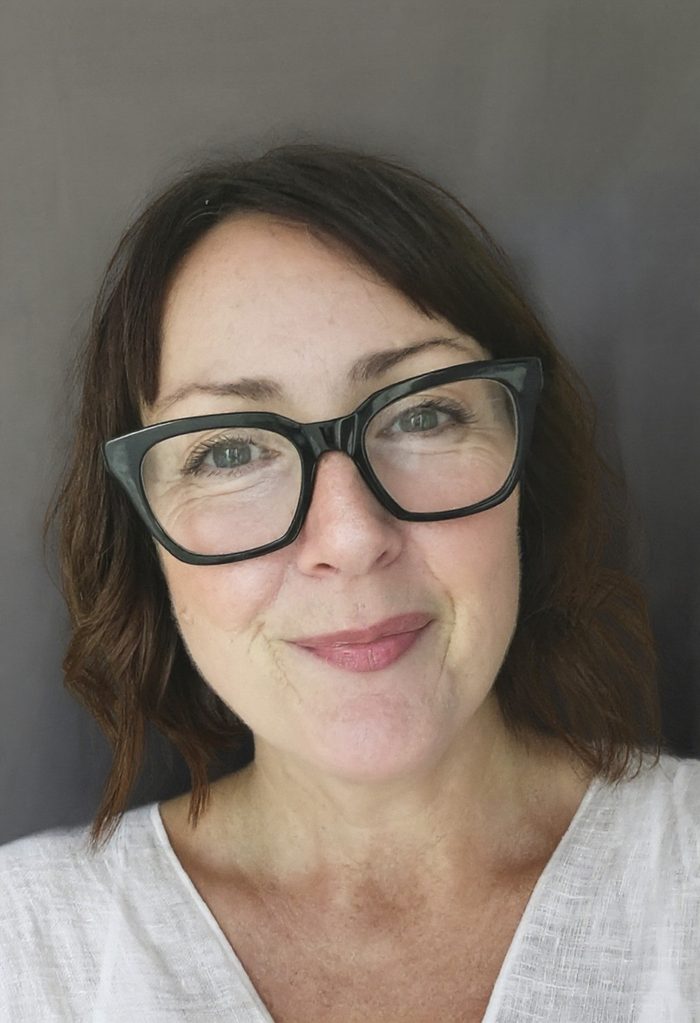
A Note on Transparency
The first participant in this programme is my partner. I've chosen to document our work openly because his experience inspired the Fourth Wall Method. Identifying details have been removed, and he has approved this write-up.
The starting point
The participant is a data professional working in the public sector. His first language is Spanish. He is highly capable, especially in mathematical and analytical work, and his written English is accurate and well organised.
His spoken English tells a different story. He learned it quickly and under pressure, in a demanding frontline role outside his profession, where the priority was to be understood immediately rather than to be correct. That kind of survival English works, but it leaves habits behind.
Years later, those early patterns have become fixed. Linguists call this fossilisation, and it's common among capable adults who had to learn a language fast.
The challenge
In his own needs analysis, he identified the problem precisely: tenses (especially the past), verbs, and pronunciation. He often describes past events in the present tense, which confuses colleagues when he's explaining his work, and word endings tend to disappear when he speaks.
At work, where he needs to explain complex ideas about data, he often feels he isn't being understood. The frustration then makes it harder to communicate clearly.
He had already tried the conventional routes: Business English workbooks, ESL courses and self-study. They helped him know the rules, but they didn't change what came out of his mouth under pressure. Knowing and doing had become disconnected.
The approach
The Fourth Wall Method treats spoken English as a performance skill as well as a linguistic one. Three strands run through every session.
Releasing tension first
Each session opens with a physical warm-up, the same way I would begin a rehearsal with professional actors. Following Stanislavski, the principle is that a performer, or anyone communicating, can't work freely while carrying physical tension. Stress shows up in the body before it shows up in communication.
Grammar anchors
Total Physical Response, developed by James Asher, links language to physical movement. It was designed for beginners. I've adapted it for a different purpose: helping advanced speakers overwrite habits that became fixed early on. Each target structure gets its own movement, so the body begins to hold what the textbook couldn't.
Imagination as a tool for pronunciation
Rather than describing where the tongue and teeth should go, we use physical images and mimicry to make sounds visible and felt.
What we've done so far
Sessions 1 to 3 · Weekly, September 2026
The early sessions focused on awareness: where the stress points are, and how frustration shows up in his speech, especially in work situations where the stakes feel higher.
In one exercise, I read aloud a piece he had written in a previous session and corrected after feedback. His task was to make a downward jab of the thumb to his shoulder every time he heard a past tense verb. He wasn't producing the language, just listening for it.
For a Spanish speaker, English past tense endings are easy to miss, because Spanish has far fewer word-final consonant clusters. Having to respond physically kept his attention on exactly the sounds he usually drops.
For pronunciation, we stood face to face and made the mechanics visible. A fingertip to the chin marks the crisp stop of a “t”. To feel the “ts” at the end of words like “rights” and “rents”, we mimed shaking and spraying an aerosol can, imagining the burst of air it takes. The image made the effort from the diaphragm tangible in a way no written explanation could.
Early observations
It's too early to claim results, but some patterns are already clear:
Emerging Patterns
- Movement helps his concentration noticeably. That's true for many learners, and particularly for those who think fast and have lots of ideas competing to come out.
- Listening exercises with physical response seem to sharpen his ear before we ask for accurate production. That order, hearing before doing, looks important.
- Physical imagery makes pronunciation feel achievable rather than abstract.
What comes next
The remaining sessions move from awareness to performance: structuring ideas under pressure, rehearsing real work scenarios, and building towards storytelling with confidence. The final report will include before and after confidence scores, recorded comparisons, and how he performs in real meetings.
Recognise this pattern?
If your English works on paper but not under pressure, a free 20-minute call is the easiest way to find out whether the Fourth Wall Method is the right fit.
Get in TouchFurther Reading
The Fourth Wall Method: A Framework for Embodied English Language Acquisition — the full theoretical account behind the approach described here.